Best Mattress for Seniors Who Sleep on Their Side in 2026
By MattressDealsOnline Editorial · Updated September 2026 · 5 mattresses ranked
A mattress changes an older side sleeper's night by cushioning the shoulder and hip without trapping the body during turns or transfers. That single fact decides most of this ranking, and it is why the five
mattresses below do not come out in the order you would get for a younger side sleeper with easy mobility.
How we ranked: every mattress is scored 0 to 100 on the same ten attributes. For
seniors who sleep on their side, pressure relief and edge support carry the most weight, with responsiveness, support behind them,
and each bed is scored on how close it lands to the firmness target, not on being firmest.
Target firmness for seniors who sleep on their side
1 · Plush5-6 · Medium10 · Extra firm
Disclosure: we earn a commission on purchases made through links on this page.
It does not affect the ranking, which is computed from the attribute weighting shown in
full further down.
#1 · Best Mattress Overall for Seniors Who Sleep on Their Side
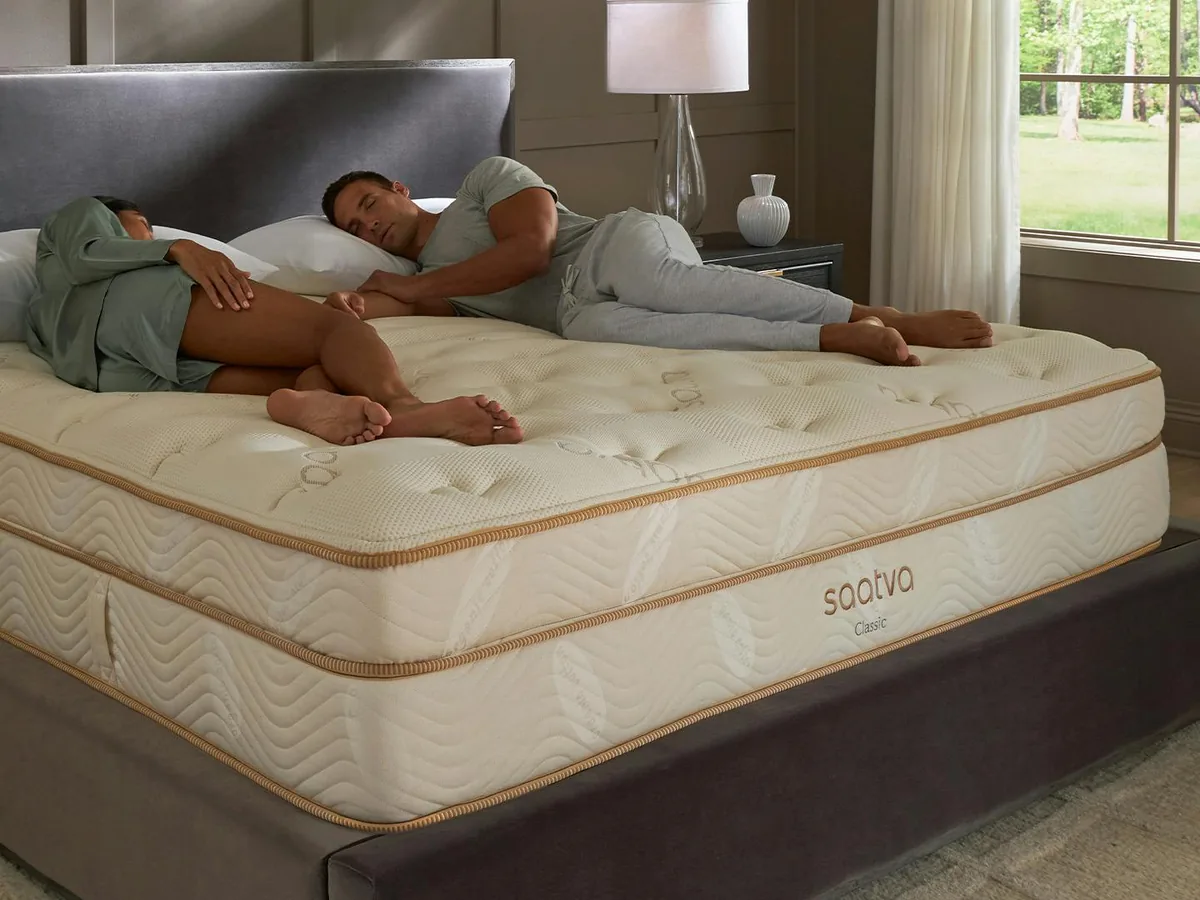
Saatva Classic
85.6/100
Scored against the weighting this page uses, the Saatva Classic comes out at 85.6.
It takes the top spot on edge support (95/100) and responsiveness (90/100),
which are exactly the attributes that carry the most weight for seniors who sleep on their side.
At 6 out of 10 it also lands within
0.8 of a point of the 5.2 target.
1 · Plush5-6 · Medium10 · Extra firm
Ring marks the 5.2 target for seniors who sleep on their side
#2 · Best Support for Seniors Who Sleep on Their Side
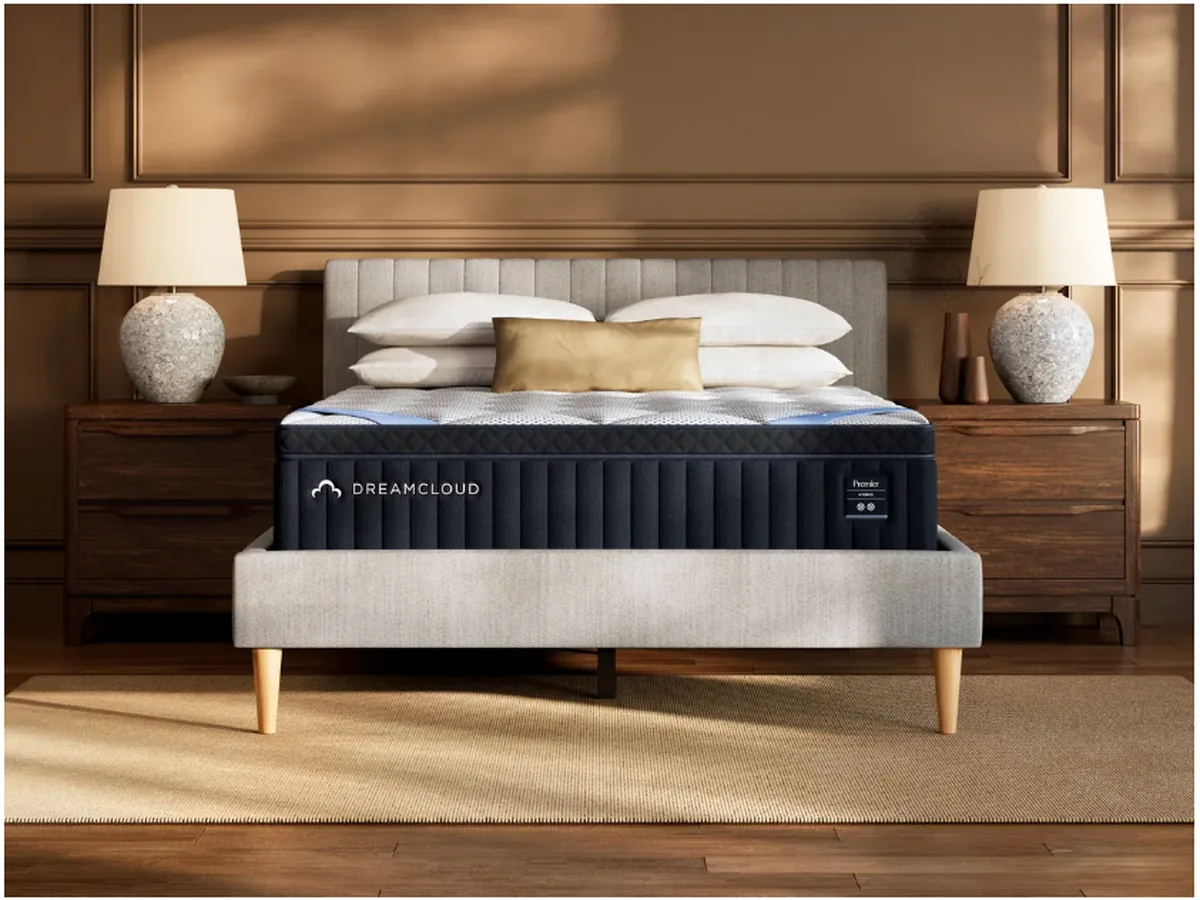
DreamCloud Premier Hybrid
79.6/100
Its strongest showing here is pressure relief at 78/100.
It has no real weakness against this weighting. It gives up ground across several
attributes instead of failing on one.
1 · Plush5-6 · Medium10 · Extra firm
Ring marks the 5.2 target for seniors who sleep on their side
#3 · Best Pressure Relief for Seniors Who Sleep on Their Side
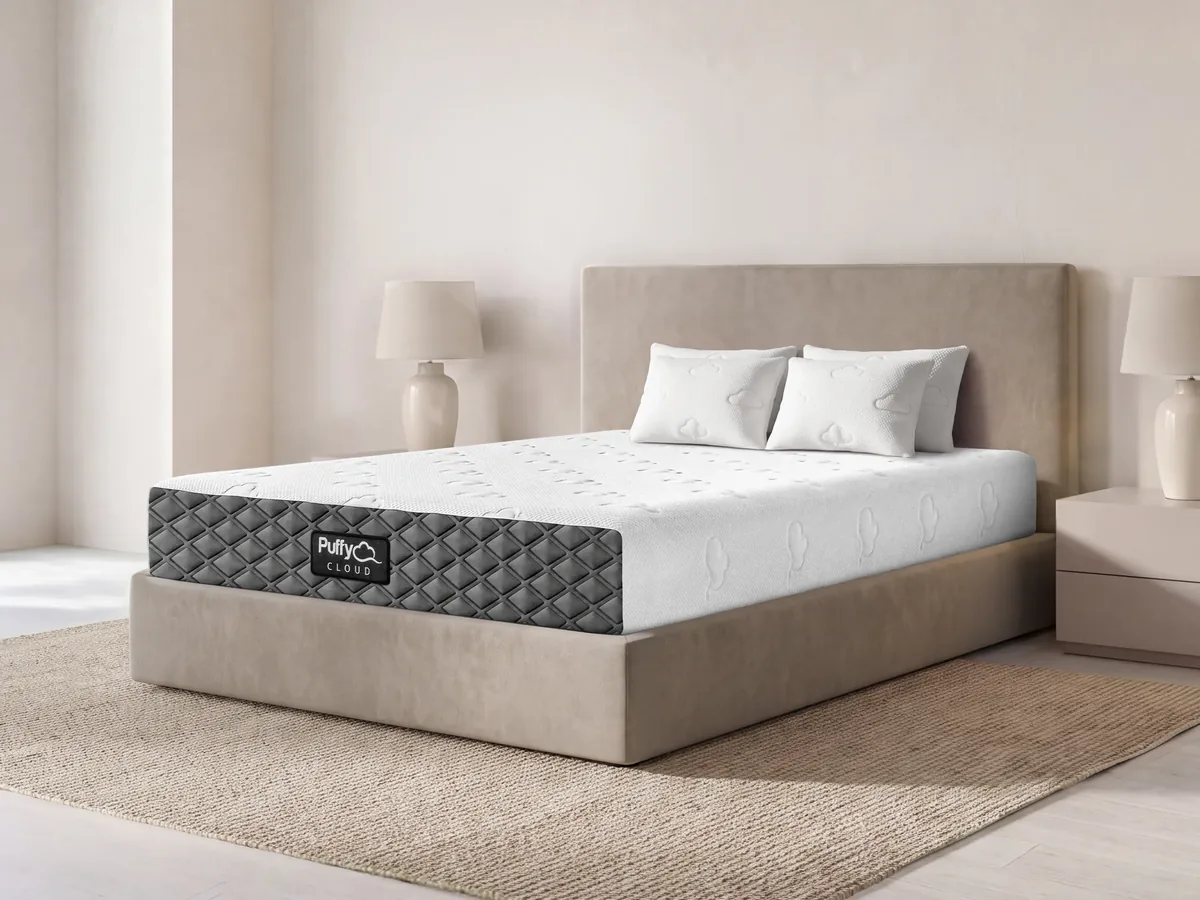
Puffy Cloud
67.3/100
Its strongest showing here is pressure relief at 90/100.
What holds it below the Saatva Classic is responsiveness, where it scores
40/100 against a weighting that cares about it.
1 · Plush5-6 · Medium10 · Extra firm
Ring marks the 5.2 target for seniors who sleep on their side
Pressure relief
90
Edge support
45
Responsiveness
40
Support
65
Type: Foam
Queen price: $1,049
Trial: 365 nights
Warranty: Lifetime
Strong: pressure reliefStrong: motion isolationStrong: 365-night trialWeak: coolingWeak: edge support
#4 · Best Motion Isolation for Seniors Who Sleep on Their Side
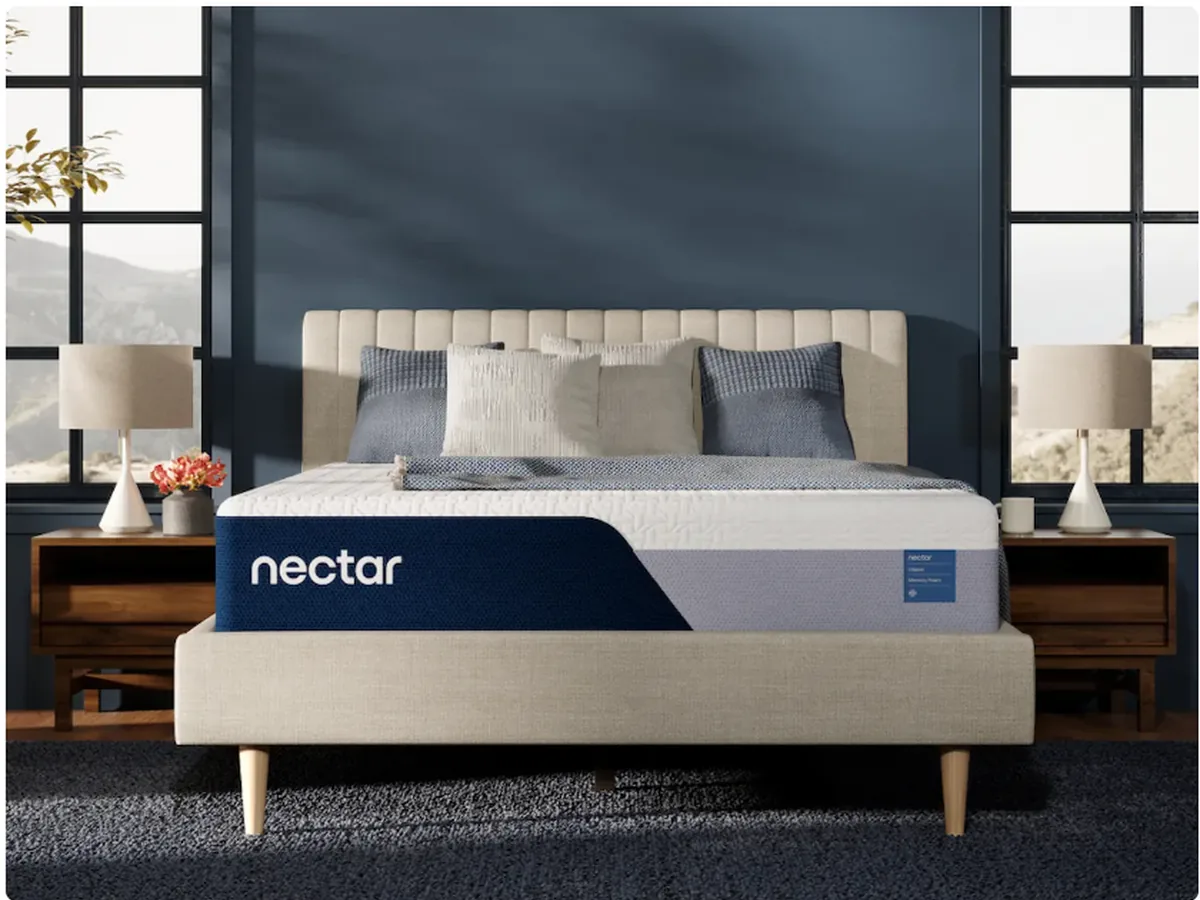
Nectar Classic Memory Foam
65.7/100
Its strongest showing here is pressure relief at 88/100.
What holds it below the Saatva Classic is responsiveness, where it scores
35/100 against a weighting that cares about it.
1 · Plush5-6 · Medium10 · Extra firm
Ring marks the 5.2 target for seniors who sleep on their side
#5 · Best Budget Mattress for Seniors Who Sleep on Their Side
SweetNight CoolNest
63.7/100
Its strongest showing here is pressure relief at 82/100.
What holds it below the Saatva Classic is responsiveness, where it scores
38/100 against a weighting that cares about it.
1 · Plush5-6 · Medium10 · Extra firm
Ring marks the 5.2 target for seniors who sleep on their side
Pressure relief
82
Edge support
42
Responsiveness
38
Support
62
Type: Memory foam
Queen price: $499
Trial: 100 nights
Warranty: 10 year
Strong: valueStrong: coolingStrong: motion isolationStrong: under $800Weak: edge supportWeak: responsiveness
Best Budget Mattress for Seniors Who Sleep on Their Side
Memory foam
63.7
5/10
$499
How we ranked these for seniors who sleep on their side
Every mattress here is scored 0 to 100 on the same ten attributes. What changes between
one page on this site and the next is how much each attribute counts. For seniors who sleep on their side,
the weighting is:
Pressure reliefContouring at hip and shoulder
×5
Edge supportPerimeter firmness when sitting or sleeping to the edge
×4
ResponsivenessBounce and ease of repositioning
×4
SupportSpinal alignment under load
×3
Firmness0 = plush, 100 = very firm
×3
Firmness is target-scored. It is not more-is-better. For seniors who sleep on their side the target is
5.2 out of 10 and each mattress is scored on how close it lands to that,
which is why a very firm model does not automatically win.
Why side sleeping changes with mobility
Older side sleepers still leave the same open space under the waist, but the cost of a poor fit is higher. The shoulder and hip need enough depth to settle without carrying a sharp point load. The surface must also let the sleeper roll, sit at the edge and stand without fighting a deep impression.
This is not a request for the softest bed. It is a request for local cushioning over a stable, accessible structure.
How pressure and movement interrupt the night
A hard surface loads the outside of the shoulder and hip, prompting small position changes that break sleep. A deep, slow cradle can create the opposite problem: the joints are cushioned, but turning and reaching the edge require more effort.
If the perimeter folds while sitting, standing begins from a low, unstable position. The useful mattress closes the shoulder gap, keeps the waist supported, releases the body easily and remains steady at the side used for getting in and out.
What seniors who sleep on their side should look for
Pressure relief that does not hold on
The top needs to spread load at the shoulder and hip, but recovery matters as much as contour. A surface that stays compressed after a turn asks the sleeper to climb its edge. Responsive foam, latex or a buoyant hybrid can cushion without keeping the old body shape.
Try a full turn from side to back and return. If the surface releases promptly and the shoulder settles again without bottoming out, the balance is close. A pressure-relieving topper can rescue a sound bed that is merely too hard.
A usable edge in the sleeping zone
Edge support is not only for sitting. A side sleeper often uses the outer part of the mattress, especially when sharing. The comfort layers should keep their shape there so the shoulder and hip stay level instead of tilting toward the floor.
Then sit where the sleeper normally stands and check whether the feet can plant firmly before rising. A firmer base or lower frame may solve an access problem more cheaply than a new mattress, so measure the complete setup before buying.
Edge support: the part you sit on
Every night begins and ends sitting on the edge of the bed, and with reduced balance that edge has to hold. Look for a reinforced perimeter: a foam encasement around the coil unit, a border of thicker gauge coils, or both. Sit on the very edge of a floor model and see if it drops away.
In an all-foam mattress the edge is only as firm as the base foam, so look for a base layer of at least 1.8 lb/ft³, and treat an edge that folds as a fall waiting to happen.
Support underneath so the hip does not overshoot
The hip is heavier than the shoulder, and on a mattress with a soft comfort layer and a weak core it sinks too far. A support core of 14 to 15 gauge pocketed coils, or a polyfoam base of at least 1.8 lb/ft³, holds it in place.
Lie on your side and feel for pressure at the waist. Light, steady pressure there means the mattress is holding the middle of the body up. Nothing at the waist and a heavy hip means the core is not doing its share.
How the support needs shift by position
Side sleeping
The shoulder should descend while the waist still feels held. Near the perimeter, that same contour should remain level enough that the sleeper does not roll toward the edge.
Back sleeping
Back sleeping spreads weight across the widest area and is the easiest position to get out of, since you can sit straight up. It also suits anyone using an adjustable base to raise the head for reflux.
Combination sleeping
Many older sleepers become combination sleepers by necessity, changing position whenever a hip or shoulder aches. That makes responsiveness the deciding trait. A surface that springs back lets you turn in one movement, not three.
Buying mistakes for older side sleepers
Solving pressure with a deep, slow cradle
Deep sink can quiet the shoulder yet make every turn and exit harder. Look for material that gives under the joint and returns promptly. Pressure relief and easy movement can exist in the same surface.
Forgetting to measure the finished height
People measure the mattress and forget the frame. A 12 inch mattress is fine on its own and a problem once a box spring and a tall frame put it at hip height. Measure from the floor to where the new mattress will sit before you order.
Sorting the pillow out last
Half of side-sleeper neck and shoulder pain is the pillow being too low. Buy or adjust the pillow first, then judge the mattress with a properly filled gap between shoulder and ear. Otherwise you may return a good mattress for a fault that was never its own.
Ready to check the latest price on the Saatva Classic?
Should an older side sleeper choose a soft mattress?
Choose enough surface give for the shoulder, not softness through the whole bed. A stable core and responsive top can relieve the joint while keeping the waist level and movement easy. The home trial should include turns and getting up, not only lying still.
Why does edge support matter to a side sleeper?
It preserves usable sleeping width and keeps the body level near the perimeter. It also supplies a steady seat before standing. A weak edge can tip the hip down during sleep and collapse during a transfer, even when the centre feels supportive.
Can a topper improve the current bed?
Yes, if the mattress is flat and supportive but too hard at the shoulder. Pick a responsive topper that releases the body during a turn. If the centre or edge already dips, adding material follows the dip and may make standing harder.
Which is better for seniors, a hybrid or an all-foam mattress?
Hybrids usually suit older sleepers better. The coil unit gives a firm edge to sit on and a surface that springs back when you turn, and the comfort layer protects the joints. All-foam can work if the base foam is dense and the edge is reinforced.
How do I know if my mattress is too soft for side sleeping?
Lie on your side and have someone look at your spine from behind. If it bows down toward the bed at the waist, the hip is sinking too far. Waking with lower back ache that eases on standing points the same way. If the spine runs level, the softness is doing its job.
Is memory foam good for seniors?
It relieves pressure well, and that helps thinner skin and sore joints. The drawback is slow recovery, which makes turning over and getting up harder. If memory foam is the preference, look for a thinner layer over coils, or a faster recovering formulation, so the mattress pushes back.